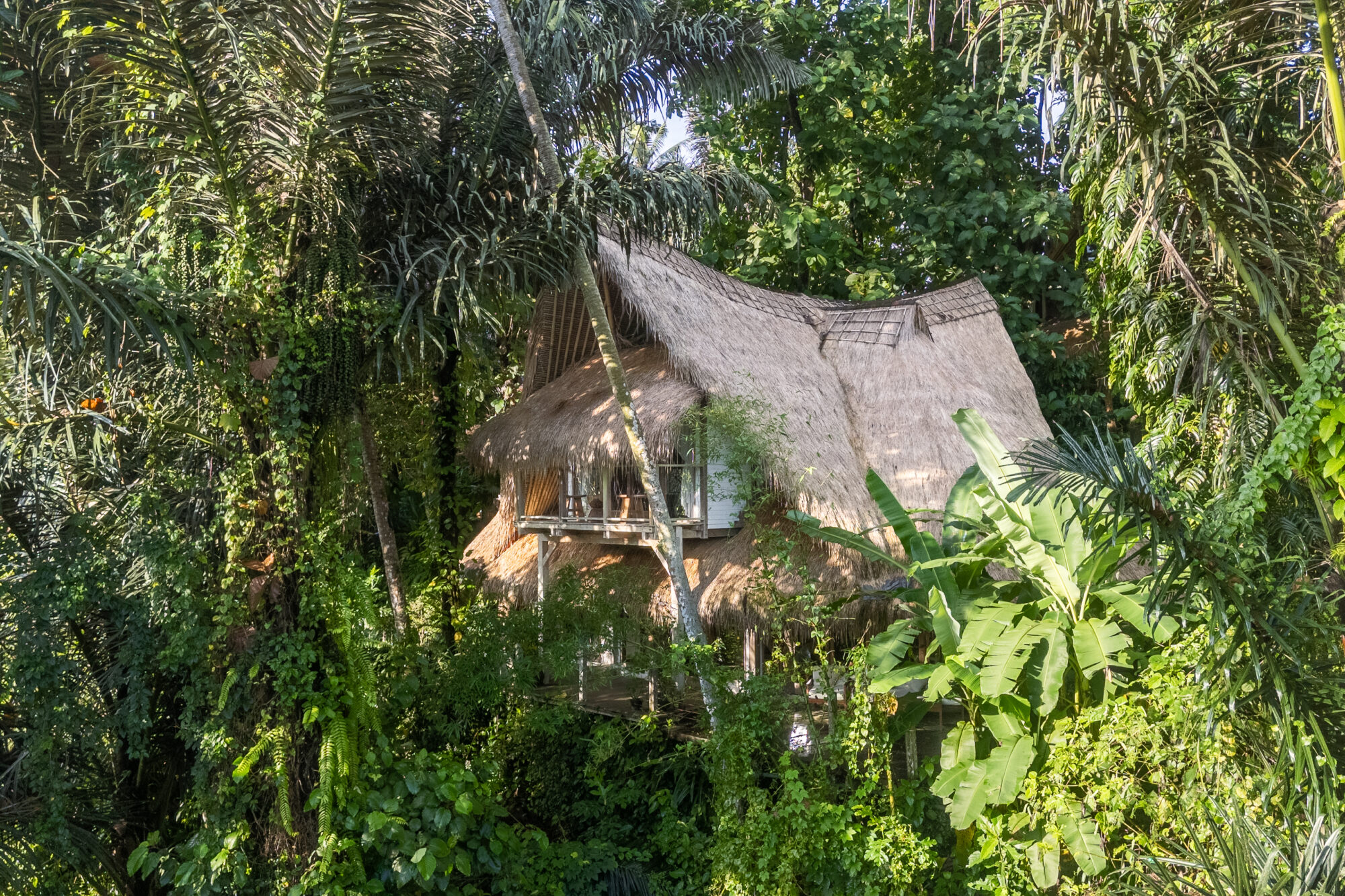
When planning an international school relocation to Bali, one of the biggest financial decisions you’ll face is accommodation. As you browse the market for housing near Green School, you will likely notice a massive contrast in options.
On one hand, you have stunning, open-air eco-friendly villas in Bali built from bamboo and reclaimed timber. On the other hand, you have modern, cheaper concrete apartments or enclosed developments.
While a concrete flat might look attractive on your initial budget sheet, living in the tropics demands a different way of thinking. Here is a breakdown of the trade-offs between choosing a sustainable villa of natural materials versus a cheaper concrete alternative.
1. The Climate Factor: Breathing vs. Trapping Heat
Concrete is an excellent conductor of heat. In Bali’s tropical climate, a concrete building acts like an oven, absorbing the intense sun all day and radiating that heat back inside long after the sun goes down.
- The Concrete Flat: To stay comfortable, you are forced to run air conditioning 24/7. This leads to skyrocketing electricity bills, a massive carbon footprint, and the dry, artificial air that often causes the infamous “AC cough” in children.
- The Sustainable Villa: Built using green architecture in Bali, eco-villas utilize high ceilings, natural alang-alang roofing, and open-air designs. They are engineered to maximize natural ventilation, drawing in the cool evening breezes from the surrounding rice fields and jungle.
2. Health, Well-being, and “Bio-Living”
Moving your family to Bali is often about reconnecting with nature and escaping the concrete jungles of the West. Your home should reflect that shift.
- The Concrete Flat: Living in a sealed box disconnects you from the island. Furthermore, Bali’s high humidity means enclosed concrete structures are prone to trapped moisture and mold—a major health hazard for growing kids.
- The Sustainable Villa: Living in a home built from natural materials like bamboo and local stone creates an immediate sense of calm. It allows for “biophilic living”—the proven concept that being close to natural elements reduces stress and improves mental well-being. It is the ultimate extension of the sustainable lifestyle your children learn at school.
3. Financial Reality: Upfront Costs vs. Quality of Life
It’s no secret that a concrete apartment or a basic western-style house can be cheaper upfront than a beautifully crafted eco-luxury villa. But what are you actually paying for?
- The True Cost of Concrete: You save on rent, but you pay in lifestyle. You face higher utility bills, less privacy, no private garden for your kids to play in, and often a long, stressful Green School Bali commute if the cheaper units are located in crowded urban centers.
- The Value of an Eco-Villa: A premium villa near the school offers space, privacy, a private pool, and a direct connection to the Green School Bali parent community. It isn’t just a place to sleep; it is a sanctuary that enhances your entire Bali experience.
Align Your Home with Your Values
If you chose Green School for your children, you’ve already chosen a path of sustainability, mindfulness, and respect for the environment. Your choice of housing is the final piece of that puzzle.
At Villa Harta, we believe you shouldn’t have to compromise. Our villa combines the breathtaking beauty of natural, sustainable materials with the luxury and comfort your family needs. Located just minutes from the school, it offers a healthy, mold-free, natural environment where your children can truly thrive.
Great content! Keep up the good work!